Protect your water system effectively: simple steps to avoid any inconvenience

Chapô

Whether during periods of extreme cold, a prolonged absence or an incident planned by the SWDE, it's essential that you take certain precautions to protect your meter and pipes. Your vigilance will enable you to avoid certain material and financial inconveniences. Discover the best practices for securing your installation and avoiding nasty surprises! 

compteur
Corps

When should you take extra care to protect your meter?

Adopting these preventive measures gives you peace of mind and protects your water installations in case of problems. If you need help, don't hesitate to consult our frequently asked questions.

1.Secure your meter during a prolonged absence⏳

When you're away for a long time, for example on holiday, it's vital to protect your installation. A water leak while you're away could not only have serious consequences for your water bill but also cause potential damage to property. There are a few things you can do to avoid problems:

Before you leave:
Turn off the water supply by closing the shut-off valve located after your meter. Take a bucket and open the drain valve to drain the system. Draining is complete when the water stops flowing.

In winter, don't forget to protect your pipes and meter. In the event of frost, these could be seriously damaged or even rendered unusable.

When you return:
Make sure your drain valve is closed and reopen your shut-off valve. Then flush the toilet and let the water flow from several taps for a few minutes to flush your pipes (about 3 litres). Make sure the water is clear before drinking.

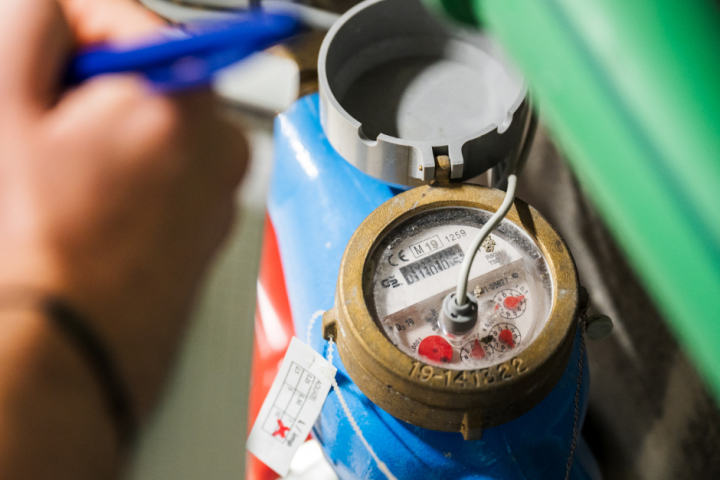
2.Protect your installation from freezing ❄️

Frost can damage your meter and pipes, especially if they’re located in unheated spaces or outdoors. In the event of a sharp drop in temperature, your system could break under the pressure of freezing water, leading to major leaks!

If your meter is outside a building (inspection chamber, etc.)
  • Seal the inside of the chamber with an insulating material (polystyrene sheets, bag of polystyrene foam balls, straw wrapped in film or plastic bag). The lid must also be completely watertight. To be safe, cover it with plastic sheeting and then with soil.
  • Check that you do not have external pipes that also need to be insulated.
  • If necessary, maintain a constant circulation in the system by letting a thin stream of water flow (only in case of extreme necessity as this is very costly).
If your meter is inside your home (cellar, garage, etc.)

Try to keep the temperature above 0°C. Ideally, the temperature of the premises should be kept above 0°C. To achieve this, you can take preventive measures:

  • Seal off potential cold air inlets (e.g. door seals) while maintaining sufficient ventilation to comply with gas safety requirements;
  • For greater safety, wrap the meter and pipes with a perfectly dry insulating material: polystyrene sheets, polyurethane foam. Avoid materials that absorb moisture, such as cloth, newspaper or glass wool;
  • If necessary, install a heating tape on the installation, taking care to avoid melting the plastic pipes, and wrap it in insulation to limit electricity consumption;
  • If necessary, maintain a constant circulation in the system by letting a thin stream of water flow (only in case of extreme necessity as this is very costly);
  • If your home is going to be unoccupied for a long time, follow our list of things to do in the event of a prolonged absence.

    What should I do if my pipes are frozen? 


3. Be prepared in the event of a planned water cut 🔨

To ensure a high-quality water supply, our teams regularly carry out work on our network. This work may result in a temporary cut in water supply. In the event of a planned water outage, we undertake to give you at least 3 clear days' warning by leaving a notification in your letterbox.

A few precautions to take: 

• Before: Build up a water reserve, particularly to prevent damage to your electrical appliances (boiler, water heater, washing machine, etc.).
•  During: We recommend closing the valve just after your meter.
•  After: When you reopen this valve, be sure to drain your pipes by flushing +/- 10 litres of water through the drain valve located after the meter.


What do you do if you have a major leak in your system? 💧

In the event of a major leak in your private installation, remember first of all to turn off the shut-off valve(s) to cut off the water supply.

Schéma d'une installation


• Shut-off valve for your private installation (no. 6 on the diagram): if you find that your installation does not have one or that it is defective, contact your plumber immediately to remedy this as soon as possible. This shut-off valve is compulsory and must enable you to turn off the water to your private installation for modifications, repairs, etc.

• Shut-off valve, property of SWDE (no. 2 on the diagram): in exceptional cases we allow you to close it, although it is normally intended exclusively for meter replacement.

Your connection: who is responsible for what?

You are responsible for the installation beyond the meter. This means:

  • the joint and the connection after the meter;
  • the shut-off valve after the meter;
  • the drain valve;
  • the non-return valve;
  • the indoor installation.

More information